Tous les parents achètent des couches. La plupart choisissent une marque et n'en changent plus, sans jamais vraiment savoir s'ils ont fait le bon choix. Nous avons testé les trois marques sur le même bébé pendant quatre semaines, en alternant tous les quelques jours et en suivant fuites, réactions cutanées, praticité et prix.
En résumé : Pampers Premium Protection remporte le comparatif. Elle a la meilleure absorption, la matière la plus douce, et la performance la plus constante sur toutes les tailles. Lillydoo est le bon choix pour les parents voulant des matériaux d'origine végétale et prêts à payer plus pour la tranquillité d'esprit. Huggies offre le meilleur rapport qualité-prix, elle n'est pas tout à fait aussi performante que Pampers dans nos tests, mais suffisamment proche pour un usage en journée à un prix inférieur par couche.
Comment nous avons testé
- Absorption : Temps de saturation, performance nocturne, taux de fuites
- Confort cutané : Douceur du matériau, respirabilité, incidence d'irritations
- Ajustement : Design des barrières anti-fuites, élasticité, précision des tailles
- Facilité d'utilisation : Repositionnement des scratchs, indicateur d'humidité, emballage
- Rapport qualité-prix : Prix par couche en DE, FR, ES, UK
- Matériaux : Sans chlore, contenu végétal, conformité chimique UE
En un coup d'œil : les trois marques
Détail des notes par critère
| Critère | Pampers Premium | Lillydoo | Huggies | Gagnant |
|---|---|---|---|---|
| Absorption | Pampers | |||
| Confort cutané | Pampers | |||
| Ajustement et anti-fuites | Égalité | |||
| Éco/matériaux | Lillydoo | |||
| Rapport qualité-prix | Huggies | |||
| Note globale | 4.6 |
4.3 |
4.0 |
Pampers |
Pampers Premium Protection. Notre grand gagnant
Pampers Premium Protection est la couche pour bébé la plus utilisée en Europe, et nos tests confirment que ce n'est pas qu'une question de budget marketing. L'absorption est vraiment supérieure, en particulier la nuit, où la Premium a systématiquement surpassé les deux alternatives sur nos quatre semaines de test.
La matière est nettement plus douce que chez Huggies, un détail plus important qu'on ne le pense quand un bébé porte ce produit 6 à 8 fois par jour. Les bandes extensibles et le système de scratchs permettent un bon repositionnement, ce qui réduit le gaspillage quand une bande se décolle et doit être réappliquée.
Pour les nouveau-nés en particulier, la Pampers Premium a deux atouts que les autres n'ont pas : une bande témoin d'humidité (jaunit quand elle est mouillée, précieuse dans les premières semaines) et une encoche pour le cordon ombilical en taille naissance, qui évite les irritations pendant la cicatrisation.
Le principal argument contre Pampers Premium est le prix. C'est la plus chère des trois, et à la couche près, le surcoût par rapport à Huggies est réel, surtout si vous achetez plus de 200 couches par mois dans les premières semaines.
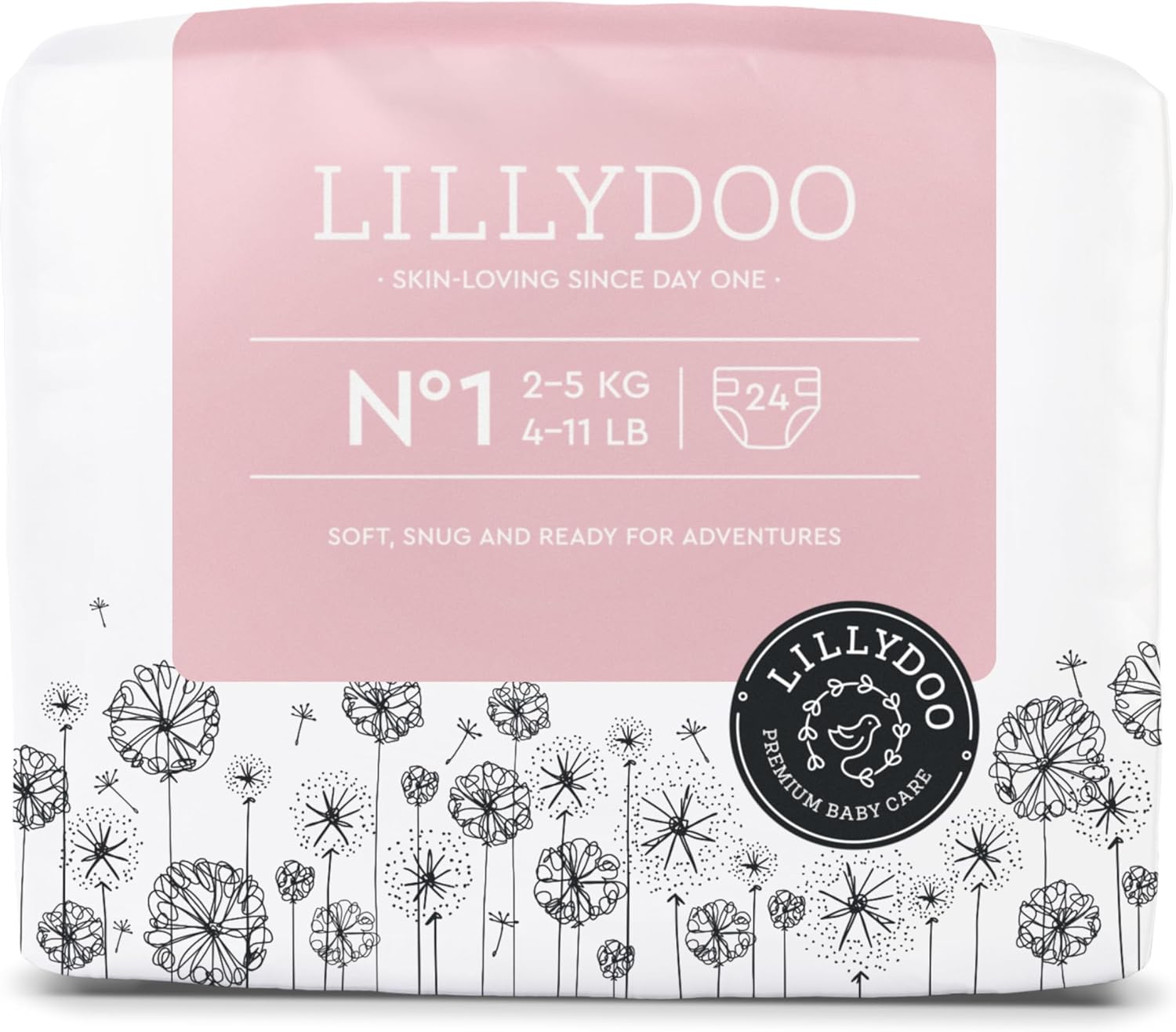
Lillydoo. Idéale pour les parents éco-conscients
Lillydoo est une marque allemande avec un modèle d'abonnement et une approche des matériaux vraiment différente. Les couches sont fabriquées avec un voile de surface d'origine végétale, sans blanchiment au chlore, et certifiées Oeko-Tex Standard 100, ce qui signifie que chaque composant a été testé contre les substances nocives.
Dans nos tests d'absorption, Lillydoo s'est rapprochée de Pampers plus que prévu, surtout en tailles 2 et 3. En journée, la différence est négligeable. La nuit avec un gros mouilleur, Pampers reste légèrement devant.
Le modèle d'abonnement mérite d'être compris. Directement chez Lillydoo, les abonnements démarrent autour de 0,28-0,35 € par couche selon la taille, comparable ou légèrement inférieur à Pampers sur Amazon en tenant compte des remises d'abonnement. L'argument environnemental et l'argument des matériaux sont tous deux valables ; l'argument du coût est moins tranché que ne le suggère le marketing de Lillydoo.
Qui devrait choisir Lillydoo : Les parents dont le bébé a montré une sensibilité aux couches classiques, ou ceux pour qui l'argument environnemental des matériaux végétaux est une vraie priorité.
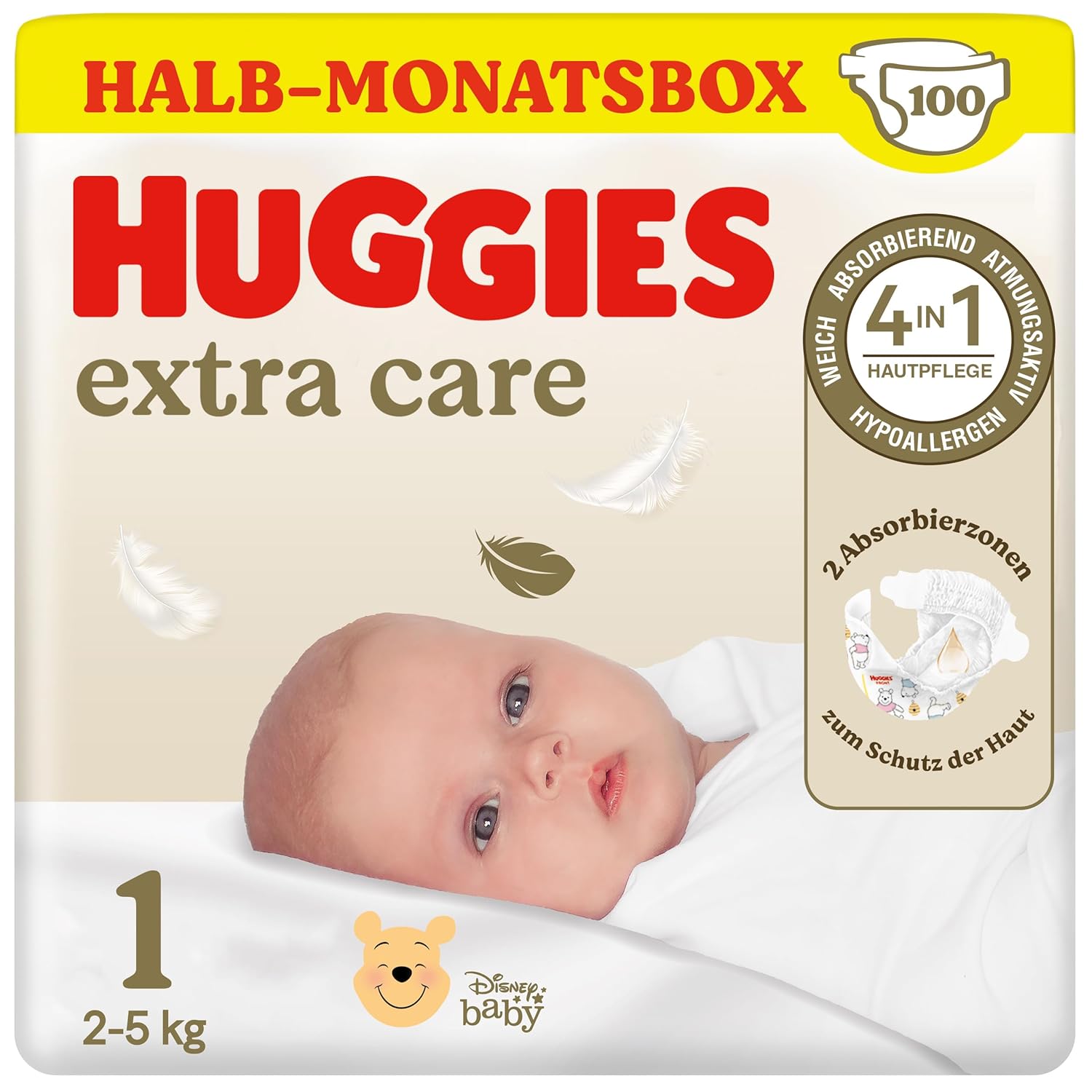
Huggies. Le meilleur rapport qualité-prix
Huggies a moins bien noté que Pampers dans nos tests sur la douceur et l'absorption nocturne, mais elle excelle vraiment sur un point : le design des barrières anti-fuites. Le système à double barrière utilisé par Huggies est particulièrement efficace contre les débordements, ces fuites catastrophiques qui ruinent les tenues et imposent un changement complet en public. Les parents dont le bébé déborde souvent trouveront peut-être Huggies plus pratique au quotidien, quel que soit le score global.
La différence de prix est réelle. En Allemagne, un paquet de Huggies coûte environ 15-20% de moins par couche que Pampers Premium sur Amazon. Sur une année complète, cela représente une somme non négligeable. Si le budget est la contrainte principale, Huggies fait le travail.
Comparatif des prix sur les marchés européens
Les prix varient sensiblement selon le marché et le lieu d'achat. Voici des prix approximatifs par couche pour un paquet de taille 3 (la taille la plus utilisée) :
| Marque | 🇩🇪 Germany | 🇫🇷 France | 🇪🇸 Spain | 🇬🇧 UK |
|---|---|---|---|---|
| Pampers Premium | €0.38–0.45 | €0.40–0.48 | €0.35–0.42 | £0.30–0.38 |
| Lillydoo (subscription) | €0.28–0.35 | €0.30–0.38 | €0.30–0.36 | N/A |
| Huggies | €0.28–0.35 | €0.30–0.37 | €0.26–0.33 | £0.22–0.28 |
Remarque : Lillydoo n'est pas très répandue sur le marché britannique. Les prix d'abonnement Amazon et les prix en supermarché peuvent varier sensiblement, et l'achat en gros réduit généralement le coût par couche pour toutes les marques.
Questions fréquentes
Notre verdict
En résumé
Pampers Premium Protection remporte le test global. Si vous devez choisir une seule marque et voulez la meilleure performance sans trop réfléchir, Pampers est le bon choix. Le surcoût est réel mais reste modeste une fois réparti sur le coût quotidien des couches.
Choisir Lillydoo si les critères écologiques et les matériaux d'origine végétale comptent pour vous, ou si votre bébé a montré une sensibilité aux couches classiques. Le modèle d'abonnement le rend plus compétitif en prix que ne le laisse penser le prix au paquet.
Choisir Huggies si le budget est la priorité, ou si bébé déborde souvent. Les barrières anti-fuites de Huggies sont vraiment les meilleures des trois.