⚡ Quick Answer
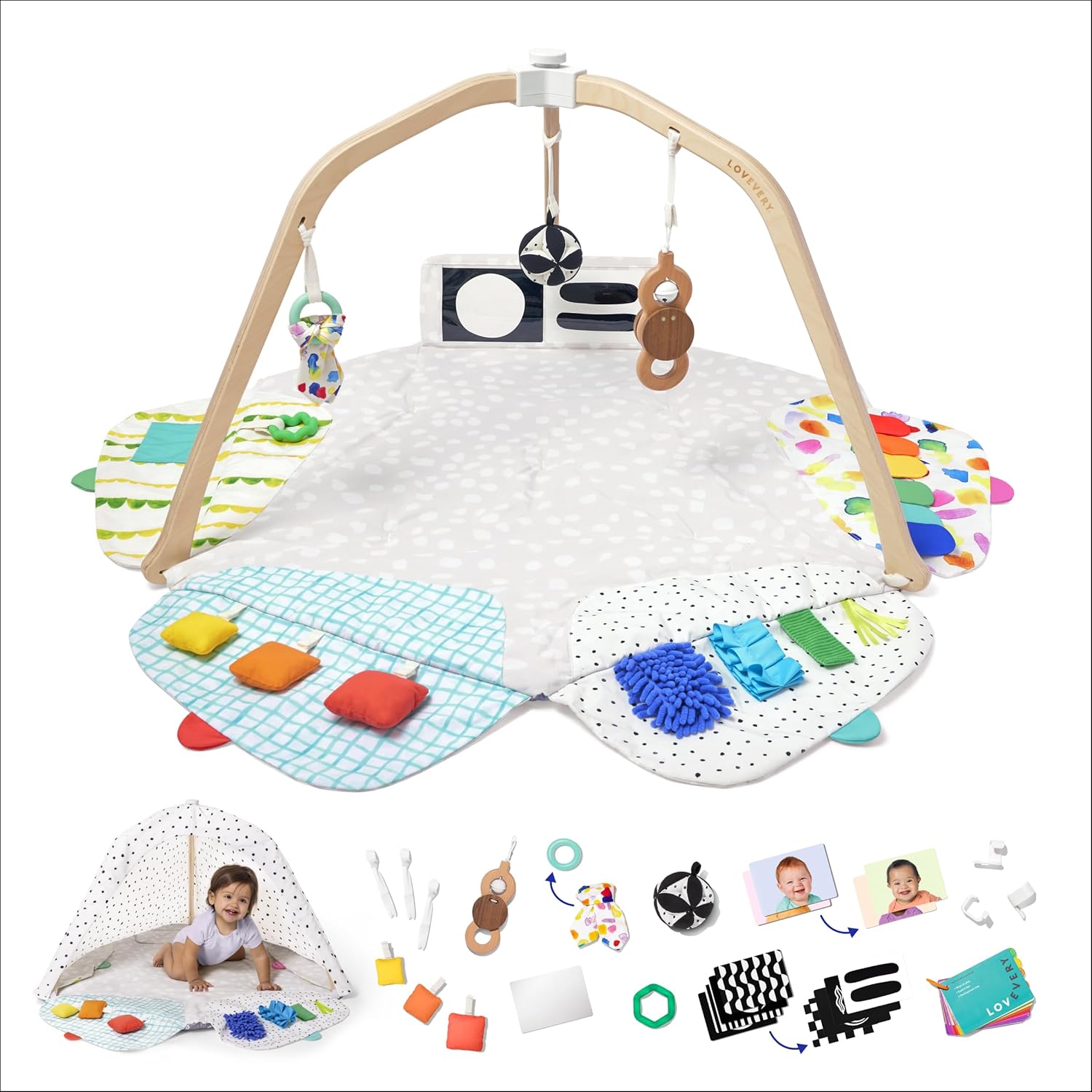
Best overall (0–6 months)Lovevery Play Gym, grows through all 6 months, research-backed
Best for 0–8 weeksHigh-contrast black/white cards, exactly what newborn vision needs
Best for 3–6 monthsSoft stacking rings, grasping, mouthing, cause-and-effect
Best budget optionHousehold objects, crinkle paper, wooden spoons, textured fabrics
The baby toy market is enormous and largely driven by novelty rather than developmental value. This guide focuses on what babies' brains actually need at each stage in the first 6 months, and which toys deliver it, including many that cost nothing.
What Babies Actually Need at Each Stage
The first 6 months is primarily about three developmental areas: visual development (contrast, tracking, depth perception), motor development (head control, reaching, grasping), and sensory exploration (texture, sound, temperature). Toys that address these win; toys that entertain parents rather than babies don't.
The most developmental "toy" for the first 3 months is your face. Talking to, making faces at, and responding to a baby's vocalisations is the most powerful developmental activity available, and free.
0–8 Weeks: High Contrast and Faces
⬛
High-contrast cards
0–8 weeks
Newborn vision is limited to 20–30cm range and prefers high-contrast patterns. Simple black/white geometric cards are ideal. Buy or print yourself, both work equally.
🔆
Crinkle toys
0–3 months
Auditory surprise, the crinkle sound captures and holds attention during periods of alertness. Simple crinkle fabric squares from any baby shop work fine.
📱
Mirror
0–6 months
Babies are fascinated by faces, including their own reflection. An unbreakable baby mirror placed in the crib or during tummy time holds attention longer than most toys.
2–4 Months: Reaching and Batting
At 2–3 months, baby begins to bat at objects intentionally. This is a significant motor development milestone. The ideal toy for this stage hangs within batting range and responds to contact with sound or movement, creating the cause-and-effect learning loop that is central to cognitive development at this age.
🎵
Activity arch
2–4 months
Dangles at batting range, responds to hitting with sound/movement. Part of most play gyms. Lovevery and Skip Hop make good standalone options too.
🎀
Cloth sensory tags
2–5 months
Textured tags at the edge of a soft square, baby grabs the tags, explores texture, develops grip. The "Taggies" style is the classic but any textured toy works.
🪶
Lightweight rattle
3–5 months
When baby develops grip (typically 3–4 months), a lightweight wrist or hand rattle allows them to create sound themselves. Keep it light, under 60g.
4–6 Months: Grasping, Mouthing and Sitting
From 4 months, the primary toy interaction is grasping, transferring hand to hand, and mouthing, all important developmental activities. Every toy a baby puts in their mouth is teaching them about texture, hardness, temperature, and shape. Silicone and natural rubber teethers are safe for this age.
🌈
Soft stacking rings
4–6 months
Grasping, transferring, mouthing. Teether rings double as a functional toy. Silicone versions are easiest to clean.
🎲
Soft blocks
4–6 months
Graspable, textured, light enough for baby to hold. Cloth blocks with different textures on each face are developmentally rich for this stage.
🐙
Silicone sensory toy
4–6 months
The MUSHIE sensory toy is the most popular in Europe, octopus shape with varied textures, safe silicone, dishwasher-safe. Good hands option for 4+ months.
Why a Play Gym Is the Best Single Purchase
If you're buying one product for the 0–6 month stage, a good play gym covers every developmental need across all 6 months: high-contrast cards slot under the arch (0–8 weeks), batting toys hang from the arch (2–4 months), and tummy time with the included toys supports motor development through 6 months.
The Lovevery Play Gym is our top pick, the developmental cards and toys are sequenced by age, the mat has a tummy time wedge, and the arch holds 5 hanging toys simultaneously. It's the most developmentally thoughtful product at this age. See our full review: Best Play Mats and Gyms 2026.
SmartBabyChoices recommends
Top-rated toys for 0–6 months
🧸
Lovevery Play Gym
The most research-backed play gym, high-contrast, developmental stage activities from birth to 12m.
🌿
Fisher-Price Rainforest Bouncer
Popular first bouncer, vibration, mobile, music. Good for the calm-baby-while-hands-free need.
🔔
Manhattan Toy Winkel Rattle
Classic sensory rattle, safe to chew, lightweight, visual and tactile stimulation from 3m+.
Affiliate links, commission at no extra cost.
Learn moreFAQ
What toys do newborns actually need?
Very little. A newborn's primary developmental needs are met by human interaction (faces, voices, touch), brief periods of visual stimulation with high-contrast patterns, and tummy time. The most expensive toys are rarely the most developmental. Before 2 months, the best "toy" is your face and voice.
When can babies play with toys?
From birth, but "play" looks very different at each stage. A 2-week-old plays by staring intently at a high-contrast pattern for 30 seconds before losing interest. A 5-month-old plays by grasping, mouthing, and banging. The developmental value of play is present from the beginning; the toy types that deliver it change each month.
Are wooden toys better than plastic toys for babies?
Not categorically. The material matters less than whether the toy is safe (no choking hazards, no sharp edges, CE/EN certified for the age range), developmentally appropriate, and free from harmful chemicals. Wooden toys are often preferred for aesthetic and environmental reasons. Plastic toys can be equally safe and developmental. For mouthing age (4+ months), silicone is generally the best material, safe, cleanable, temperature-neutral.
Related on SmartBabyChoices