Best Baby Monitors for Apartments 2026: Small Space, Thick Walls
European city apartments present specific challenges for baby monitors: concrete and brick walls that block radio signals, smaller square footage where range matters less but wall penetration matters more, and often open-plan layouts where proximity makes some monitors overkill.
Why Apartments Need Different Monitor Considerations
The main difference from houses is wall composition. European apartment buildings, particularly pre-1990s construction, use thick reinforced concrete floors and walls that significantly attenuate radio signals. WiFi signals are particularly affected: the 2.4GHz band used by most WiFi baby monitors loses much more power through dense concrete than the 1.9GHz DECT frequency used by dedicated monitors.
The practical result: WiFi monitors that work at 50 metres in open air may struggle to maintain a clean signal through 2–3 concrete walls in a typical European apartment block. DECT monitors handle this better.
DECT vs WiFi in Concrete Buildings
| DECT monitor | WiFi monitor | |
|---|---|---|
| Signal through concrete | Better, 1.9GHz penetrates well | Worse, 2.4GHz absorbed by concrete |
| Router dependency | None, works independently | Complete, loses function if router drops |
| Interference | Low, dedicated frequency | Higher, shares spectrum with neighbours |
| Smart features | None | Sleep analytics, remote viewing, AI alerts |
| Privacy | Inherently private. no internet | Cloud-dependent, see our WiFi safety guide |
In apartment buildings with many WiFi networks (typical in city blocks), WiFi monitors also compete with dozens of neighbouring networks on the same frequency bands. DECT's dedicated frequency avoids this entirely.
What About Studio Apartments?
In a genuine studio apartment (one room), you may not need a baby monitor at all. If you can hear baby breathing from your bed without electronic assistance, a monitor adds complexity without benefit. Many parents in studios find they don't use a monitor, or use a simple audio-only monitor for the early weeks.
Monitors become essential when baby's room is separated by at least one wall, or when you regularly spend time in rooms where baby is not audible.
Our Apartment Monitor Rankings
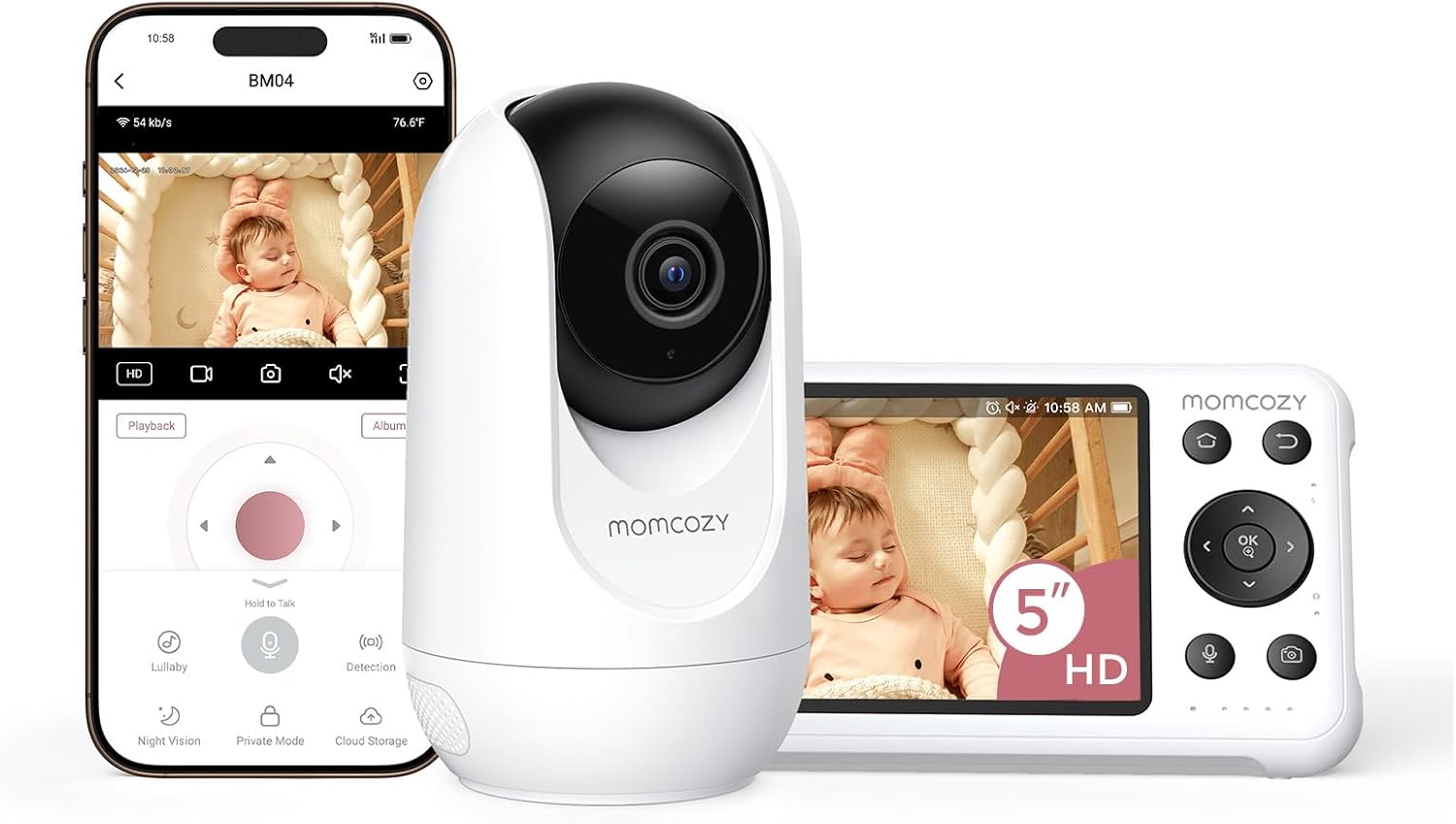
"In our testing across several European city apartments with concrete construction, the Momcozy BM04 maintained clean video signal through 3 concrete walls where WiFi monitors struggled. The DECT frequency is the right technology for European apartment stock."
- DECT 1.9GHz, best penetration through concrete
- No WiFi dependency, works even if router drops
- No interference from neighbour WiFi networks
- No subscription. no ongoing cost
- 5" HD screen with excellent night vision
- No remote viewing from outside the apartment
- No smart features or sleep analytics
- 8-hour battery on parent unit