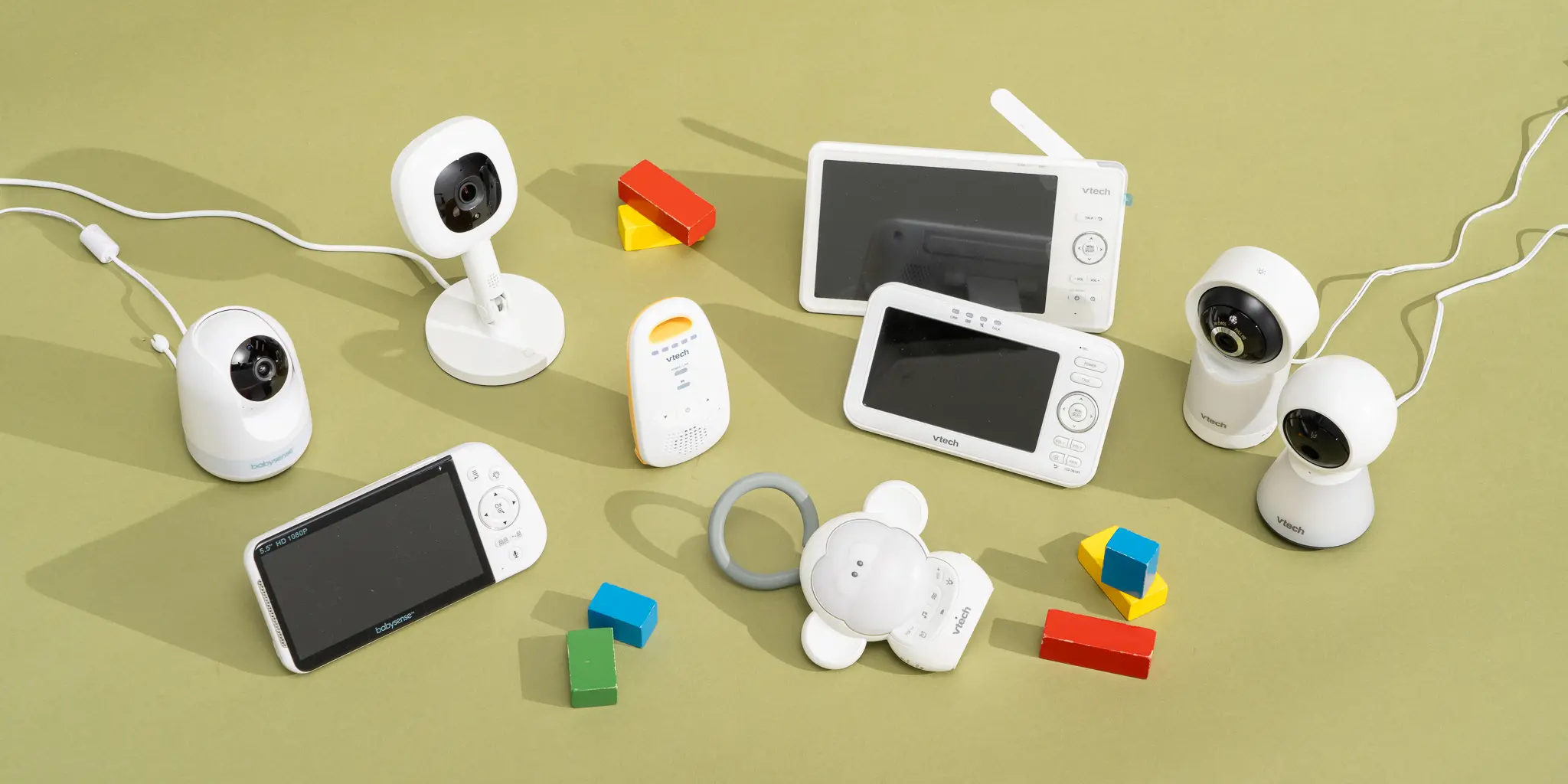
Baby monitors have become unexpectedly complicated. What used to be a simple audio device is now a market full of AI features, breathing trackers, subscription tiers and smart alerts. Most of it you don't need. Here's what actually matters.
The 7 Criteria That Actually Matter
1
Screen size and video quality
5-inch screens are the practical minimum for clear viewing at night without leaning in. 1080p matters more at night, look for infrared night vision quality, not just pixel count. Day video quality is almost always adequate; night vision is where monitors differ significantly.
→ Get at least 5 inches and confirmed 1080p night vision
2
WiFi vs DECT technology
DECT monitors work on their own secure frequency. no internet needed, no remote access risk, generally better range through thick European walls. WiFi monitors offer phone app access and smart features but depend entirely on your internet connection staying up.
→ DECT for reliability; WiFi for features. Know which you're choosing.
3
Subscription fees
Nanit and Cubo AI require monthly subscriptions (€6–10/month) for full functionality. Over 2 years, that's €150–240 on top of device cost. Factor this into your comparison, the Momcozy BM04 is cheaper overall despite a higher upfront price than some subscription-free alternatives.
→ Calculate total 2-year cost before comparing prices
4
Range through real walls
Manufacturers quote open-air range (300–500m). In a European home with concrete walls, thick floors and signal interference, expect 20–50m effective range. DECT monitors handle dense European construction better than WiFi models in our testing.
→ Ignore advertised range; test in your actual home during the return window
5
Battery life on the parent unit
If you'll carry the parent unit around the house, 8–10 hours minimum. If it stays on your bedside table plugged in all night, this matters less. The Eufy SpaceView Pro leads in battery life in the no-subscription category at 10+ hours.
→ 8 hours minimum if you'll use it unplugged
6
Two-way audio quality
Being able to talk to your baby from another room, or from downstairs, is genuinely useful. Test both directions: the sensitivity of the baby unit microphone and the clarity of the parent unit speaker. Cheap monitors often have clear one-way audio but poor two-way.
→ Test two-way audio specifically, it's often an afterthought in cheaper models
7
European availability and support
Not all monitors are easily available across all 7 European markets. Some require purchasing directly from brand websites with variable support. Check your specific country before buying, the Momcozy BM04 and Eufy SpaceView Pro are the most consistently available across all markets.
→ Check Amazon availability in your specific country, not just "Amazon EU"
WiFi vs DECT: The Most Important Decision
This is the single most consequential choice when buying a baby monitor. Understanding the difference prevents most buyer's regret.
DECT monitors (like the Momcozy BM04 and Eufy SpaceView Pro) operate on their own dedicated 1.9GHz frequency. They are completely independent of your home internet. They cannot be accessed remotely. They generally handle European concrete construction better. The trade-off: no phone app, no remote viewing when you're not home, no smart features.
WiFi monitors (like the Nanit Pro and Cubo AI Plus) connect through your home router to the internet and a smartphone app. They offer remote viewing from anywhere, sleep analytics, AI features and cloud storage. The trade-off: if your router resets or your internet goes down during the night, your monitor goes dark. They also require a strong WiFi signal in the baby's room.
For most European parents, especially those in apartments with thick walls or unreliable internet. DECT is the more practical choice. If smart features and remote monitoring genuinely matter to you, WiFi is worth the trade-off.
The Subscription Fee Trap
The most common source of post-purchase dissatisfaction with baby monitors is subscription fees, specifically, discovering that the features you bought the monitor for are locked behind a monthly payment you didn't budget for.
Before you buy any WiFi monitor, answer these questions:
- What features work without a subscription?
- What features require the paid plan?
- What does the subscription cost per month and per year?
- What happens to your data if you cancel?
For a full breakdown of which brands charge and what they charge for, see: Baby Monitor Subscription Fees: Which Brands Charge?
Our Recommendation
For most European parents, the Momcozy BM04 is the right choice. no subscription, no WiFi dependency, 5-inch HD screen, excellent range. See the full comparison: Best Baby Monitors 2026: Tested Across 7 European Markets.
🛒 Products mentioned in this article
Momcozy BM04 DECT monitor
Eufy SpaceView baby monitor
Affiliate disclosure: links earn us a small commission at no extra cost to you. Learn more
SmartBabyChoices recommends
Our monitor recommendations by type
📡
Momcozy BM04 : Best DECT
No WiFi, no subscription, best range through concrete walls. Our top pick for European apartments.
🤖
Cubo Ai Plus. Best smart WiFi
AI face-uncover alert, no mandatory subscription, remote viewing via app. Best value smart monitor.
📊
Nanit Pro. Best analytics
Best sleep tracking and analytics. Subscription required but the data is genuinely useful.
Affiliate links, we earn a small commission at no extra cost to you.
Learn more
Frequently Asked Questions
What should I look for in a baby monitor?
The seven most important factors: video quality (5-inch screen minimum), WiFi vs DECT, subscription fees (calculate total 2-year cost), range through real walls, battery life, two-way audio quality, and European availability in your market.
Is WiFi or DECT better for a baby monitor?
DECT is more reliable, it's independent of your internet connection and handles thick European walls better. WiFi monitors offer more features but require a stable internet connection. For most parents, DECT is the safer choice. See our full guide:
Best Baby Monitors Without WiFi.
Do I need a video baby monitor?
For most parents, yes. Being able to see your baby's position at a glance significantly reduces night anxiety. Audio-only monitors are cheaper but require you to interpret every sound without visual context, which tends to increase parental anxiety rather than reduce it.