⚡ Before You Start
Water temperature37°C exactly, use a thermometer, not your elbow
Water depth5–8cm, just enough to support, not submerge
How often2–3 times per week, daily is unnecessary and dries skin
Umbilical cord stumpSponge baths only until it falls off (7–21 days)
The first few newborn baths are among the most anxiety-inducing moments of early parenthood. Wet, slippery, potentially screaming, and your job is to remain calm, hold on securely, and do it safely. This guide takes the uncertainty out of it with a clear step-by-step process.
Before You Start: Prepare Everything
The single most important preparation rule: everything you need must be within arm's reach before you put baby in the water. You cannot leave a baby in water to get a forgotten towel, even for 5 seconds.
Checklist before starting:
- Baby bath filled with 5–8cm of water at 37°C (thermometer verified)
- Large hooded towel laid open nearby
- Clean nappy and clothes on a flat surface
- Cotton wool or wash cloth
- Baby wash if using (optional for newborns)
- Nappy cream if needed
Step-by-Step Bath Guide
1
Undress baby and wrap in a towel
Keep baby wrapped while you lower them, this keeps them warm and slightly contained. Unwrap just before they go in the water.
2
Support the head and neck with one hand, always
Your non-dominant hand goes under baby's head, thumb over the shoulder, fingers supporting the neck and head. This hand stays there throughout the entire bath. The other hand is free to wash.
3
Lower baby in feet first
Lower baby into the water gently, feet first. Most babies settle once the warm water is familiar. If baby screams, this is normal for the first few baths. Continue calmly; it usually passes as baby becomes familiar with bathing.
4
Wash face first with plain water
Using a damp cotton wool pad or wash cloth, wipe each eye from inner corner outward, using a fresh piece for each eye. Then gently wipe the rest of the face. No soap on the face for newborns.
5
Wash the body
A small amount of gentle baby wash is optional, plain warm water is sufficient for newborns. Pay attention to skin folds (neck, underarms, groin) where moisture collects. Gently wash the hair last, this often causes the most upset so keep it brief.
6
Lift and wrap immediately
Use both hands to lift baby, one still supporting the head. Immediately wrap in the warm towel. Pat dry thoroughly, especially in skin folds. A damp skin fold is a rash risk.
7
Nappy and dress while baby is calm
Most babies are calm immediately after a warm bath. Use this window efficiently, nappy, then clothes, paying attention to skin fold drying before closing the nappy.
Umbilical Cord Stump: Sponge Baths Only
Until the umbilical cord stump falls off (typically 7–21 days after birth), avoid immersion baths. Instead, do "top-and-tail" sponge baths: baby lies on a changing mat, and you wash with a damp cloth, keeping the cord stump dry.
Keep the stump clean and dry, fold the nappy below it if it reaches. No creams, alcohol or dressings on the stump unless advised by your midwife. It will yellow, brown, and eventually dry and fall off naturally. Signs of infection (redness around the base, discharge, bad smell) warrant a call to your midwife or GP.
What Products to Use on a Newborn
Plain warm water is all a newborn needs for the first few weeks. If you choose to use a wash product:
- pH-neutral baby wash only, adult shower gel disrupts the skin barrier
- Fragrance-free for newborns, fragrances are the most common contact irritant
- No baby powder, inhaled powder is a respiratory risk. No longer recommended
- Moisturiser: If baby's skin is dry, a fragrance-free emollient (Oilatum, Aveeno Baby) applied after drying is appropriate. Not required for normal skin.
🛒 Products mentioned in this article
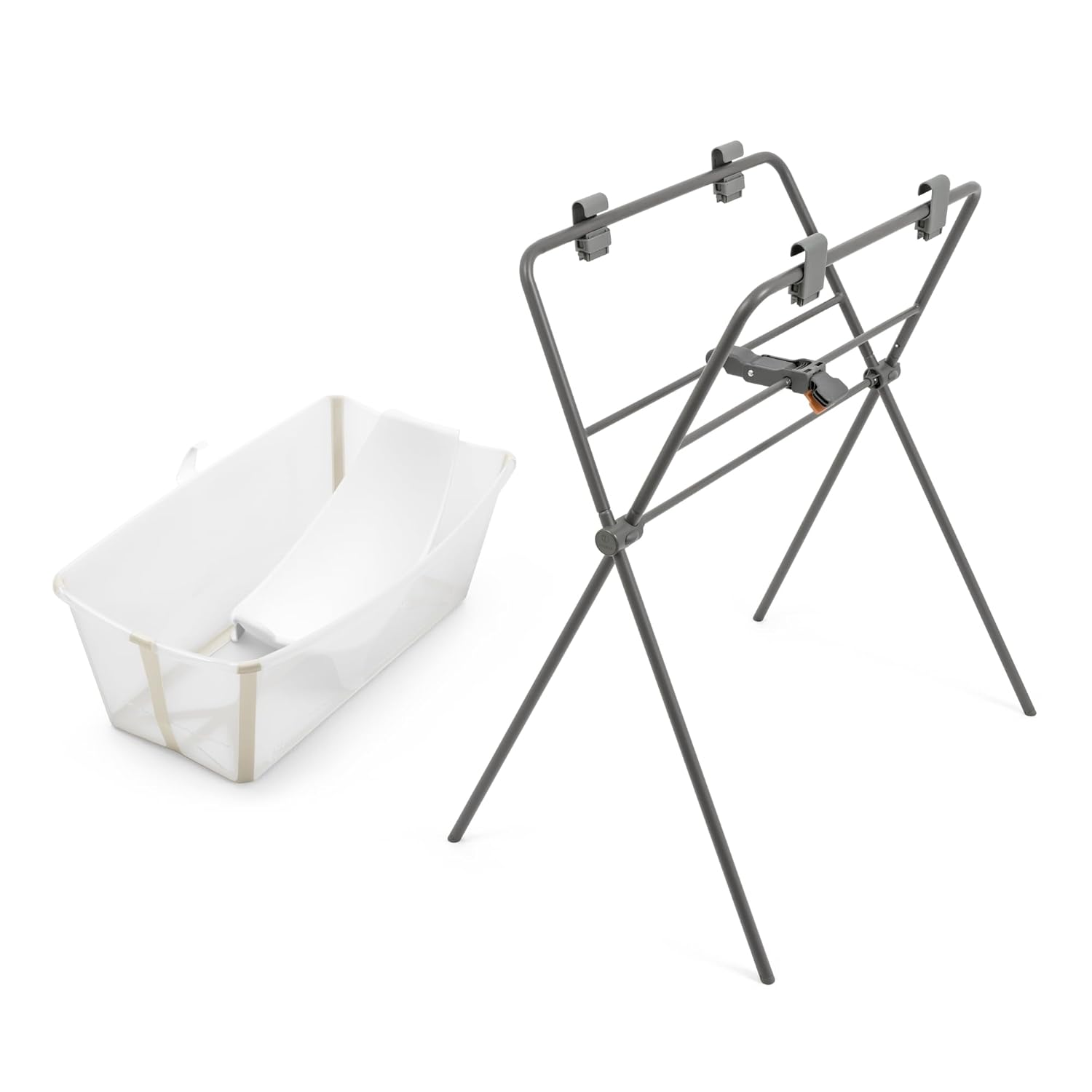
Stokke Flexi Bath foldable tub
Affiliate disclosure: links earn us a small commission at no extra cost to you. Learn more
SmartBabyChoices recommends
Newborn bath essentials
🛁
Stokke Flexi Bath
Best baby bath, folds flat, works from birth to age 6, stable and easy to drain.
🌡️
Braun PRT 2000 Bath Thermometer
Bath thermometer, essential for accurate temperature checking. 37°C maximum, every time.
🌼
Weleda Calendula Baby Wash
Fragrance-free, gentle baby wash, suitable from birth. The most recommended brand by European midwives.
Affiliate links, we earn a small commission at no extra cost to you.
Learn more
FAQ
My newborn hates baths, is this normal?
Yes, most newborns protest the first several baths. The sudden temperature change, undressing, and unfamiliar sensation is genuinely unpleasant for them initially. Keep baths short (3–5 minutes), warm (37°C), and consistent. By 4–6 weeks most babies accept baths calmly; many come to enjoy them. If distress continues past 8 weeks, try different timing (not before a feed or when tired) or a different bath position.
Can I bathe a newborn alone?
Yes, with practice. The first few times, having a second adult present to hand things is helpful. Once you're comfortable with the one-handed support technique, solo newborn bathing is simple. Never attempt it if you're exhausted to the point of impaired judgment.
How do I wash a newborn's hair?
Use a small damp cloth or cotton wool to wipe the scalp with plain warm water or a tiny amount of baby shampoo. You don't need to fully wet the hair. Cradle cap (yellowish scaly patches on the scalp) is extremely common in newborns, apply a small amount of baby oil, leave for a few hours, then gently brush off with a soft brush.
Related on SmartBabyChoices