Safe Sleep Guide for Babies: What European Parents Need to Know
Sudden Infant Death Syndrome (SIDS) is rare, but it is the leading cause of death in babies aged 1 month to 1 year. The good news is that evidence-based safe sleep practices significantly reduce the risk. This guide summarises what European health authorities and the latest research recommend.
🔒 The Core Rules at a Glance
Always place baby on their back, on a firm flat surface, in a clear sleep space, in a room with you for the first 6 months. These four principles alone account for the majority of SIDS risk reduction.
The Core Safe Sleep Rules
- Place baby on their back for every sleep
- Use a firm, flat mattress with no incline
- Keep the sleep space clear. no pillows, bumpers, toys
- Room share for at least the first 6 months
- Use a firm mattress that fits snugly in the cot
- Keep room temperature between 16–20°C
- Breastfeed if possible, it reduces SIDS risk
- Use a dummy/pacifier at sleep times after breastfeeding is established
- Put baby to sleep on their front or side
- Use loose bedding, pillows or cot bumpers
- Smoke around baby or during pregnancy
- Overheat baby. no heavy blankets, no hats indoors
- Use inclined sleepers, bouncers or car seats for unmonitored sleep
- Bed-share if you've consumed alcohol, sedatives or are a smoker
- Use wedges or positioning devices not CE certified for infant sleep
Understanding SIDS Risk
SIDS rates in Europe have fallen dramatically since the 1990s, largely as a result of back-sleeping campaigns. In the UK, SIDS rates fell by over 70% between 1991 and 2010 as the "Back to Sleep" message became widely understood.
SIDS risk is highest between 1 and 4 months, and is rare after 6 months. Risk factors include premature birth, low birth weight, maternal smoking during pregnancy, exposure to smoke after birth, soft sleep surfaces, and overheating. Most SIDS deaths occur during sleep, which is why the sleep environment is so important.
Setting Up a Safe Sleep Environment
The sleep surface: Firm and flat. A cot, crib, or co-sleeper with a firm mattress that fits with no gaps at the sides. The mattress should be covered with a fitted sheet and nothing else. no pillows, no bumpers, no positioning wedges.
Temperature: 16–20°C is the recommended room temperature. A useful guide: baby should feel warm to the touch on their chest or back of the neck. not hot or sweaty. No hats indoors for sleep. One more layer than you'd wear is a reasonable starting point for clothing.
What to dress baby in: A sleep sack (sleeping bag) rated for the room temperature is the safest option, it removes loose bedding entirely. Grobag and other European brands publish guides matching tog ratings to room temperatures.
Room Sharing vs Bed Sharing
Room sharing (baby in their own sleep surface in your room) is recommended by European health authorities for at least the first 6 months. It reduces SIDS risk, likely because parents respond more quickly to changes in breathing and because the presence of adults in the room affects room airflow and CO2 levels.
Bed sharing significantly increases SIDS risk in certain conditions: if either parent smokes (even outside the home), has consumed alcohol or sedatives, is very tired, or if baby was premature or low birth weight. If none of these risk factors apply, the absolute risk increase is lower, but most European health authorities still recommend against it.
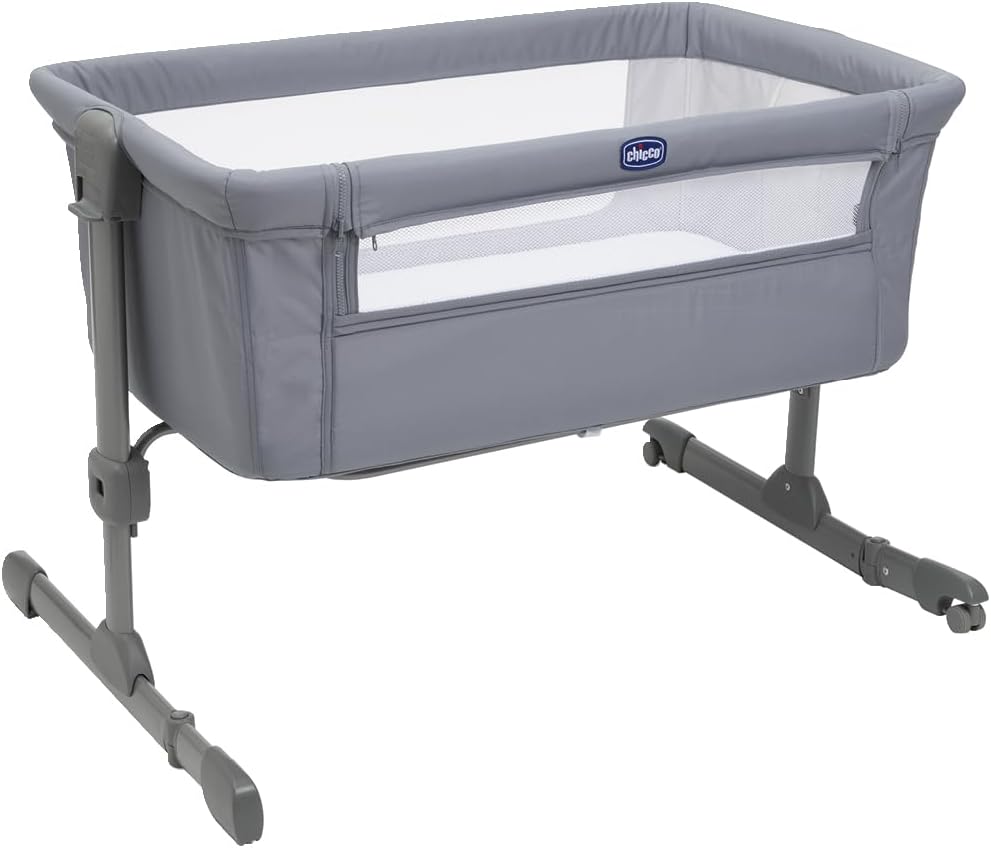
A co-sleeper bedside crib (like the Chicco Next2Me) offers a practical middle ground: baby sleeps in their own firm, flat space attached to the parent's bed, allowing easy night feeding while maintaining a safe sleep surface. See our review: Sleep hub, co-sleepers and bassinets.
Safe Swaddling
Swaddling can help some babies sleep more soundly by reducing the startle reflex. When done correctly, it is safe. Key rules:
- Always place a swaddled baby on their back. never front or side
- The swaddle should be snug around the torso but loose around the hips, hips need room to flex
- Baby's face and head should be uncovered
- Stop swaddling as soon as baby shows signs of rolling, typically 2–4 months
- A swaddled baby who rolls face-down cannot push up to free their airway
See our guide: Best Baby Swaddles 2026.
Affiliate disclosure: links earn us a small commission at no extra cost to you. Learn more