Best Co-Sleeper Cribs 2026: Bedside Bassinets for European Parents
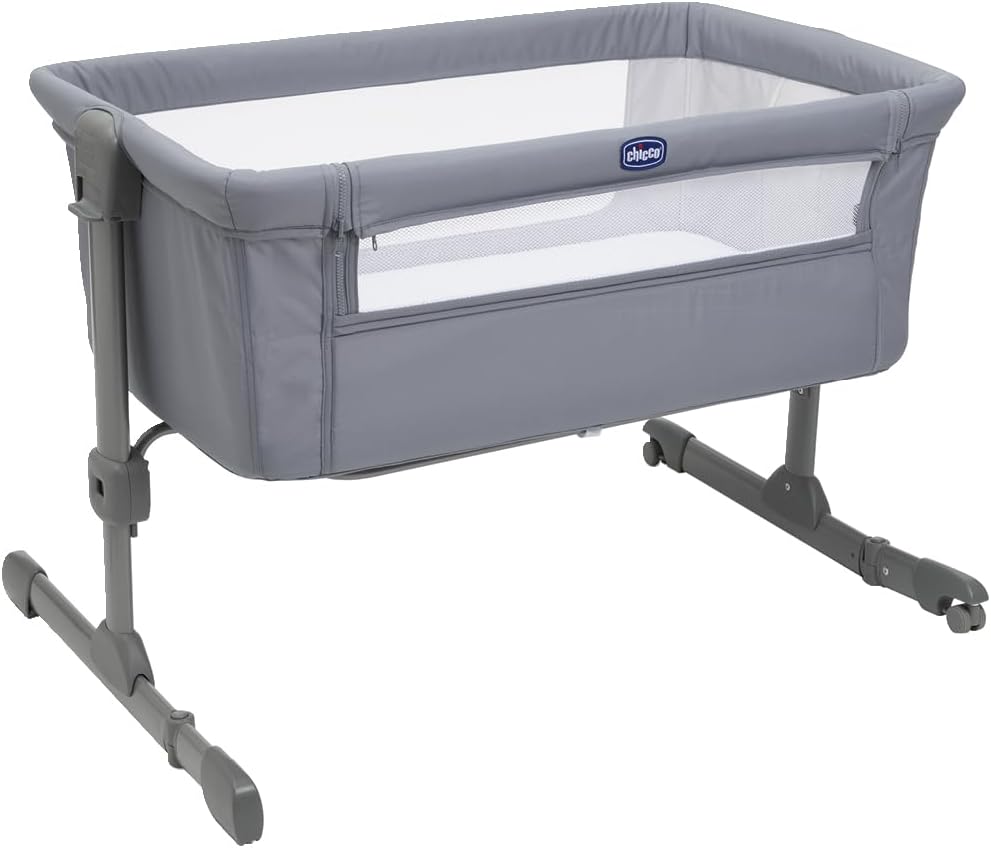
A co-sleeper crib attaches to the side of your bed, giving baby their own safe sleep surface within arm's reach. It makes night feeding dramatically easier. no getting up, no fully waking, while keeping baby in their own safe space. EU health authorities recommend room-sharing for at least 6 months; a co-sleeper is the most practical way to do this.
| Co-Sleeper | Score | Height adj. | Max weight | Buy |
|---|---|---|---|---|
| Chicco Next2Me 🏆 Top Pick | 4.6 | 8 positions | 9 kg | |
| SnüzPod 4 | 4.5 | 6 positions | 9 kg | 🇬🇧 |
1. Chicco Next2Me. Our Top Pick
"The best co-sleeper for European homes. The 8-height positions work with virtually any bed frame, including platform beds and beds with storage, which eliminates the biggest compatibility headache with co-sleepers."
- 8 height adjustments, works with most EU beds
- Breathable mesh sides on 3 panels
- Folds compactly for travel or storage
- EN 1130 certified for EU markets
- Machine washable mattress cover
- Available across all 7 European markets
- Limited to 9kg, typically 6 months
- Assembly takes 30–45 minutes initially
- Attachment strap may not work with all bed frames
The Chicco Next2Me's real practical advantage is height compatibility. European homes have a huge variety of bed heights, and the 8 adjustment positions cover platform beds, standard divans, beds with drawers underneath, and higher antique frames. Most co-sleepers have 3–4 positions and don't cover this range.
The side panel drops fully to give direct access to baby from the parent's bed. During breastfeeding, this means latching baby without sitting up, which significantly reduces the disruption to both parent and baby during the night.
Safety: Co-Sleeper vs Bed-Sharing
Co-sleeper cribs (bedside cribs) are not bed-sharing. Baby has their own separate mattress, their own firm sleep surface, and their own contained sleeping space. They are attached to the parent's bed but categorically different from placing baby in the parent's bed. All EU-certified co-sleepers comply with EN 1130.
For full safe sleep guidance: Safe Sleep Guide for Babies.