⚡ Quick Answer
Safe for0 to first signs of rolling (typically 2–4 months)
Key rulesSnug torso, loose hips, chin off chest, always on back
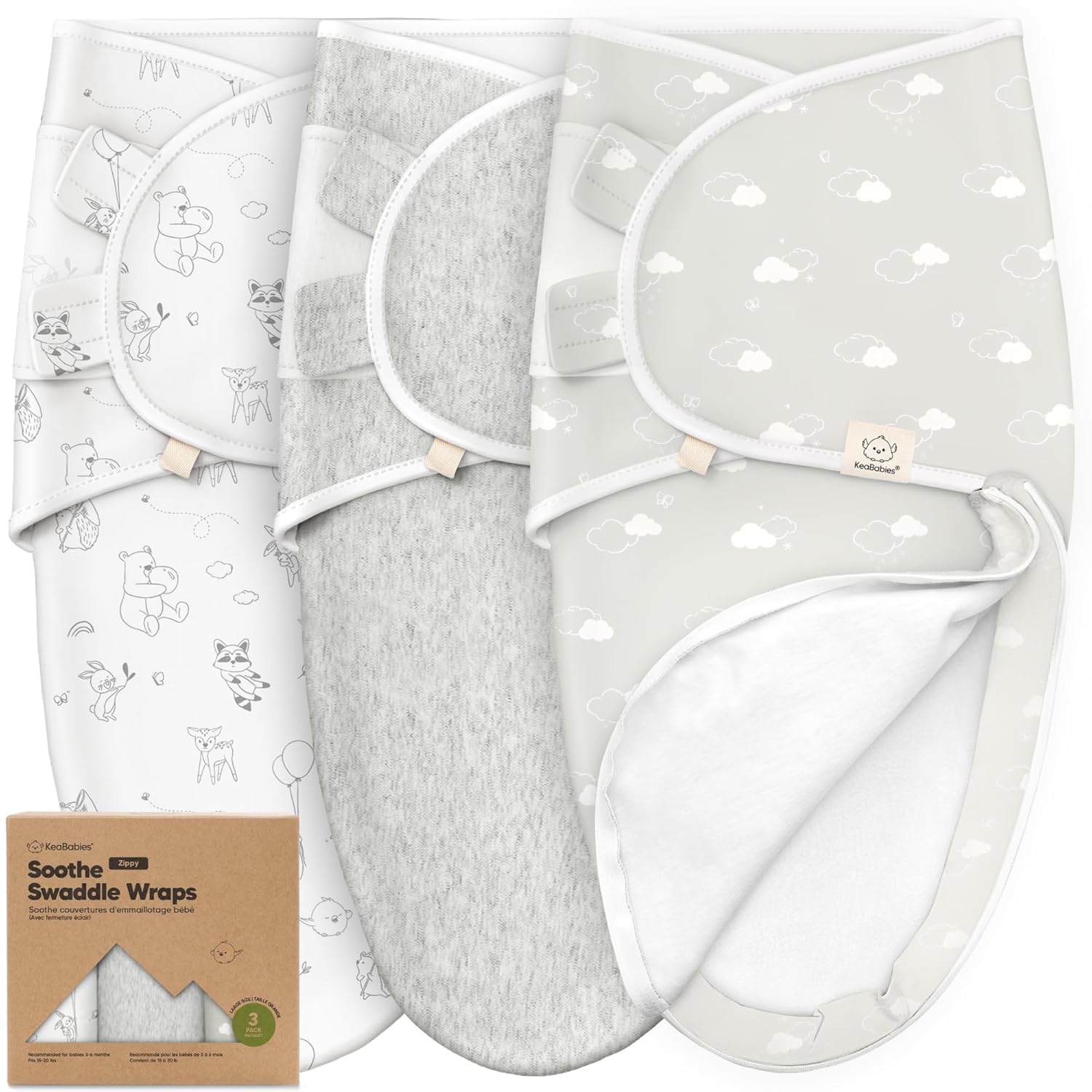
Easiest methodZip swaddle (KeaBabies), takes 10 seconds, no folding
When to stopImmediately when baby shows any rolling attempt
Swaddling is one of the most effective tools for calming a newborn and extending sleep. Done correctly, it's safe and beneficial. Done incorrectly, it poses risks. This guide covers both the technique and the safety rules in detail.
Why Swaddling Helps
Newborns have a startle reflex (Moro reflex) that causes them to throw their arms wide and wake themselves, often repeatedly during the light sleep phases that dominate newborn sleep cycles. Swaddling contains the arms and prevents this reflex from interrupting sleep.
It also mimics the snug pressure of the uterus, which many newborns find deeply calming. Research consistently shows swaddled babies cry less and sleep longer in the first months.
Step-by-Step: Traditional Blanket Swaddle
1
Lay the blanket as a diamond
Place a square muslin or swaddle blanket on a flat surface in a diamond orientation. Fold the top corner down about 15cm to create a straight edge at the top.
2
Position baby on the blanket
Place baby face-up with their neck at the folded edge. Arms should be slightly bent. not rigidly straight. This is the natural resting position.
3
Fold the left side across
Bring baby's right arm down gently alongside their body. Pull the left side of the blanket across baby's body and tuck it under their left side.
4
Fold up the bottom
Fold the bottom point of the blanket up toward baby's chin. Tuck it into the fold at baby's right shoulder. Critically: leave room for knees to bend and hips to flex, the hip area must not be tight.
5
Fold the right side across
Bring baby's left arm down. Pull the right side of the blanket across and tuck it firmly underneath baby's back on the left side. Baby should feel snugly held but the fabric should not be tight around the legs and hips.
6
Check before placing to sleep
Run through the safety checklist: chin off chest, hips loose (you should be able to fit 2–3 fingers between the fabric and baby's thigh), face completely uncovered. Place baby on their back.
The Easier Way: Zip Swaddles
Zip swaddles eliminate the folding entirely. A zip-up swaddle like the KeaBabies Soothe Zippy takes about 10 seconds to apply, ideal for nighttime changes when fumbling with a blanket while sleep-deprived is genuinely difficult.
The zip is also silent, unlike velcro swaddles that rip loudly and can wake a baby you've just settled. Zip swaddles are also safer for beginners because the hip-safe design is built in, you can't accidentally wrap the hips too tightly.
Safety Rules You Must Know
⚠️ The 5 safety rules, all required, not optional
1. Always on the back. A swaddled baby must only be placed to sleep on their back. never side or front. A swaddled baby cannot push up if they roll face-down.
2. Chin off chest. Baby's chin must not touch their chest, this restricts the airway. Check that you can fit two fingers between chin and chest.
3. Hips must be loose. The hip area must allow the knees to bend and hips to flex. Tight wrapping around the hips can cause or worsen hip dysplasia.
4. Face uncovered. No part of the swaddle should cover the face. Check every time.
5. Check for overheating. Swaddled babies overheat more easily. Baby's chest or back of neck should feel warm but not hot or sweaty.
When to Stop Swaddling
Stop swaddling the moment your baby shows any sign of rolling, typically between 2 and 4 months. Signs include: pushing up on arms during tummy time, rocking side to side in the crib, or successfully rolling even once during play.
Once rolling ability develops, a swaddled baby who rolls face-down cannot use their arms to push up and reposition, which creates a serious safety risk. Stop immediately at the first rolling attempt, regardless of how much baby seems to need the swaddle.
The transition can be done gradually: swaddle with one arm out for a few nights, then both arms out, then move to a sleep sack. See our guide: Best Baby Swaddles 2026.
SmartBabyChoices recommends
Our recommended swaddles
🧸
KeaBabies Soothe Zippy Swaddle
Zip-up. no technique needed, hip-healthy, stays on. Our top pick for the first 3 months.
🌙
Love to Dream Swaddle UP
Arms-up position, more natural for some babies. Good for transitioning to sleep sack.
🧸
Ergobaby Swaddler
Classic hospital-style with hip-safe design, widely available across EU.
Affiliate links, commission at no extra cost.
Learn moreFAQ
How tight should a swaddle be?
Snug around the torso, you should not be able to fit more than 1 finger between the fabric and baby's chest. But loose around the hips, you should be able to fit 2–3 fingers between the fabric and baby's thigh. The torso is snug; the bottom half is not.
Can swaddling cause hip dysplasia?
Incorrect swaddling with the hips extended and knees straight can contribute to hip dysplasia. Correct swaddling keeps the hips in the natural frog position, bent knees, splayed hips. The International Hip Dysplasia Institute endorses hip-healthy swaddling. Zip swaddles with built-in hip space are the easiest way to ensure correct positioning.
My baby breaks out of swaddles, what do I do?
Either tighten the wrap (many parents don't wrap snugly enough) or switch to a zip or velcro swaddle that's harder to escape. Arms-up swaddles like the Love To Dream Swaddle UP work well for babies who consistently fight having their arms down, they allow the natural arms-up position while still containing the startle reflex.
Related on SmartBabyChoices