Tummy Time Guide: When to Start, How Long, and What to Do When Baby Hates It
Tummy time is one of the most important activities for baby's physical development, and one of the most universally resisted. Almost all babies dislike it initially. Understanding why it matters and how to make it work helps parents persist through the early weeks when progress feels invisible.
Why Tummy Time Matters
Since the Back to Sleep campaign in the 1990s significantly reduced SIDS rates across Europe and the US, babies spend most of their time on their backs, which is correct for safe sleep. But this means they need dedicated tummy time for the muscle development that used to happen naturally.
Tummy time develops:
- Head and neck control, lifting the head against gravity is the foundation of all subsequent motor milestones
- Upper body strength, shoulder, chest and back muscles needed for rolling, sitting and crawling
- Prevents positional plagiocephaly, the flat head spot that can develop from too much back-lying without counterbalancing front time
- Visual development, the tummy position gives a different visual perspective and challenges the eyes differently
When to Start and How Much
| Age | Session length | Daily goal | What to expect |
|---|---|---|---|
| 0–4 weeks | 1–2 minutes | 2–3 sessions/day | Head mostly down, brief lifts |
| 1–2 months | 3–5 minutes | 10–15 min total | Brief head lifts, 45-degree angle |
| 2–3 months | 5–10 minutes | 20–30 min total | Holds head at 45–90 degrees |
| 3–4 months | 10–15 minutes | 30+ min total | Head at 90 degrees, pushes up on forearms |
| 4–6 months | 15–20 minutes | As much as possible | Extended arm push-up, beginning to roll |
How to Do Tummy Time
The classic tummy time is on a firm flat surface (play mat on the floor). But there are several variations that work better for different babies and ages:
- Chest-to-chest: Place baby face-down on your chest while you recline at 45 degrees. This is the gentlest introduction and works well in the first weeks. Baby can look at your face, which motivates head lifting.
- Lap tummy time: Place baby face-down across your lap (perpendicular to your legs). This is easier than flat floor tummy time and good for nappy changes.
- Rolled towel support: Roll a small towel and place it under baby's chest, at armpit level. This reduces the effort needed to lift the head by supporting some of the weight, good for young babies or those who hate flat tummy time.
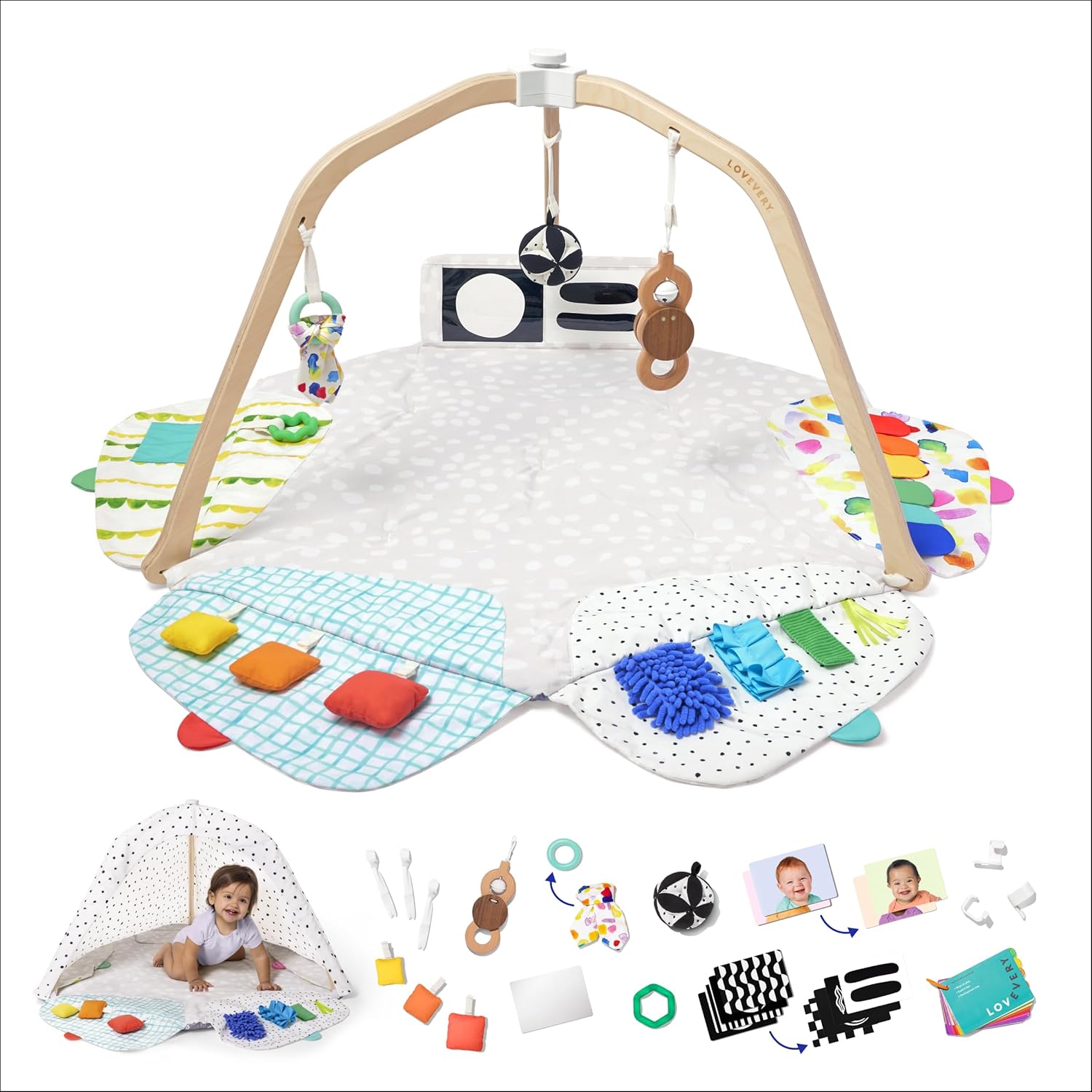
- Play mat with visual interest: Once baby can manage a few minutes, a play mat with a mirror, high-contrast cards propped in front, or dangling toys at eye level extends engagement significantly.
What to Do When Baby Hates It
Almost every baby hates tummy time initially. The key is: short, frequent, engaged. Don't push through distress, stop, comfort, try again later. Strategies that help:
- Get on the floor at baby's eye level, your face is the most motivating thing in the world to a newborn
- Place a mirror at eye level, babies are fascinated by faces, including their own reflection
- Start immediately after a nappy change, baby is alert, comfortable, and already on their tummy
- Time it carefully. never do tummy time right after a feed (reflux risk) or when overtired
- Build to 30 seconds before 2 minutes, some babies need to build from just a few seconds upward
The tolerance builds quickly
A baby who screams at 30 seconds of tummy time at 4 weeks will typically tolerate 5 minutes by 8 weeks if sessions are consistent. The neck and upper back muscles strengthen rapidly, each session is genuinely easier than the one before, even when it doesn't feel like it.
Tummy Time Milestones
- 4–6 weeks: Brief head lifts (1–2 seconds) to look around
- 2 months: Holds head at 45-degree angle for several seconds
- 3 months: Head steadily at 90 degrees; pushes up on forearms
- 4 months: Extended arm push-up; begins to look sideways and track objects
- 5–6 months: Beginning to roll from tummy to back; may rock on tummy
Affiliate disclosure: links earn us a small commission at no extra cost to you. Learn more