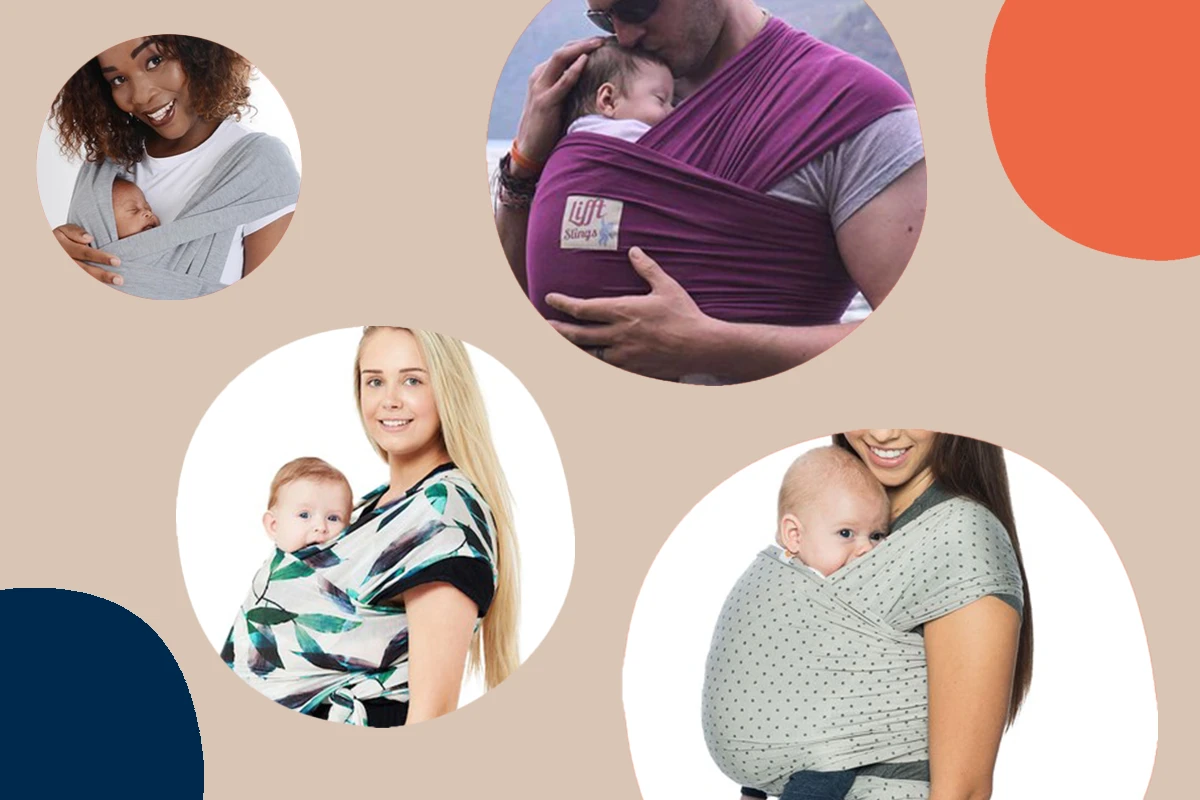
Babywearing has been practiced across cultures for thousands of years, long before prams existed. Today, it's having a genuine renaissance in Europe, driven partly by research on the benefits of closeness, partly by the practical realities of urban life, and partly by the fact that some babies simply won't tolerate being put down.
The market is confusing. There are structured carriers, stretchy wraps, woven wraps, ring slings, meh dais, and a dozen subcategories of each. This guide cuts through all of that to help you understand the three main types every new parent needs to know, and which one makes sense for your situation.
Why Babywear?
The benefits of babywearing are well-documented. Worn babies tend to cry less, a 1986 study in the journal Pediatrics found that babies who were carried for at least 3 hours a day cried 43% less overall. More recent research points to benefits for infant attachment, breastfeeding, and maternal postnatal wellbeing.
Practically, a good carrier frees your hands for everyday tasks, makes navigating public transport and stairs far easier than a stroller, and is often the only thing that allows some parents to function during the fourth trimester.
The Three Main Types of Baby Carrier
Every baby carrier falls into one of three categories. They are fundamentally different products. not just variations of the same thing.
| Type | Best Age | Learning Curve | Back Support | Best For |
|---|---|---|---|---|
| Structured Carrier | 0–36 months | Low | Excellent | Everyday use, longer walks |
| Stretchy Wrap | 0–6 months | High | Good | Newborns, closeness, home use |
| Ring Sling | 0–24 months | Medium | Fair | Short trips, quick ups and downs |
1. Structured Carriers
Structured carriers are pre-formed with padded waistbelts and shoulder straps, like a hiking rucksack. You buckle in, adjust the straps and go. They're the most accessible type for beginners and the most comfortable for longer walks with heavier babies.
- Easy to put on, low learning curve
- Excellent back and shoulder support
- Suitable from newborn (with insert) to 3+ years
- Most are machine washable
- Multiple carry positions (front, back, hip)
- Good for longer walks and heavier babies
- Bulkier than wraps or slings
- Less adjustable for very small newborns
- Higher price point than basic wraps
- Can feel hot in summer
Best structured carriers for European parents: The Ergobaby Omni 360 is our top pick, it's newborn-ready without an insert, has four carry positions, and is among the most comfortable for long walks. The BabyBjörn One is slightly easier to put on solo and is excellent for petite parents. See our full guide: Best Baby Carriers 2026.
2. Stretchy Wraps
A stretchy wrap is a long piece of jersey-like fabric (typically 5–6 metres) that you tie around your body. Once tied, you can pop baby in and out without retying. The result is an incredibly close, snug carry that newborns often find deeply calming.
- Most snug, womb-like carry, ideal for newborns
- Very affordable (€30–€60)
- No buckles, fully adjustable to any body
- Can be pre-tied before leaving home
- Lightweight and packable
- Steep learning curve, multiple YouTube tutorials needed
- Long fabric requires practice to manage
- Only suitable to approximately 6 months (stretchy fabric loses support with heavier babies)
- Hot in summer months
- Fabric drags on the ground when tying
Stretchy wraps are an excellent option for the first three months specifically, when babies want maximum closeness and don't yet weigh enough for the fabric to sag. Popular brands in Europe include Moby, Boba and Lenny Lamb. The main commitment is learning to tie correctly, which takes 2–3 practice sessions.
Note: Woven wraps (not stretchy) are a separate category, more supportive, harder to learn, and can be used to 3+ years. They are beyond the scope of this beginner guide.
3. Ring Slings
A ring sling is a length of woven fabric threaded through two aluminium rings. The fabric goes over one shoulder, across the body, and the baby sits in the pocket created by the fabric. The rings allow quick adjustment for different positions and different wearers.
- Quickest to put on and take off
- Ideal for babies who want frequent ups and downs
- Suitable from birth to 2+ years
- Compact, folds into a small bundle
- Easy for breastfeeding in the carrier
- Adjustable between different-sized wearers
- One-shouldered, less back support than structured carriers
- Not ideal for very long carries
- Learning curve for correct tightening
- Not recommended for newborns without prior babywearing experience
Ring slings are particularly popular with parents of toddlers who still want occasional carrying, the quick on/off makes it practical when a toddler alternates between walking and being carried every five minutes. They are also excellent for breastfeeding on the go once you're comfortable with the positioning.
Which Type Is Right for You?
The right carrier depends on your specific situation. Here's a simple decision framework:
- You have a newborn and want maximum closeness: Stretchy wrap. The snug feel closely mimics the womb and is deeply calming for most newborns.
- You want one carrier for the first three years: Structured carrier. The Ergobaby Omni 360 with a newborn insert covers birth to toddlerhood in one product.
- You want something quick for short trips: Ring sling. The fastest to put on and take off.
- You have back pain: Structured carrier with a good waistbelt. See our guide: Best Baby Carriers for Back Pain.
- You want to babywear in summer heat: Linen or mesh-panel structured carrier. See our guide: Best Baby Carriers for Summer.
- You're a petite parent: Look for carriers with extensive size adjustment. The BabyBjörn One and Tula Free-to-Grow are particularly adjustable.
The TICKS Safety Rules
Regardless of which carrier type you choose, safe babywearing follows the same five principles, known as TICKS:
🔒 The TICKS Rules for Safe Babywearing
Ergonomic Positioning: The M-Position
The ergonomically correct position for a baby in a carrier is known as the M-position (or froggy position): knees higher than the bottom, thighs supported to the back of the knee, creating an M-shape when viewed from the front.
This position supports the natural development of the hip joint and is recommended by the International Hip Dysplasia Institute. It requires that the carrier's seat panel be wide enough to support the full thigh. not just the bottom. Check your specific carrier's instructions for how to achieve correct positioning.
Narrow-based carriers (where fabric only supports the bottom, not the thighs) do not allow the M-position and are generally not recommended. All carriers from established babywearing brands in the EU support ergonomic positioning by design.
Affiliate disclosure: links earn us a small commission at no extra cost to you. Learn more