Safe Co-Sleeping: European Guidelines and the Safest Approaches
Co-sleeping is one of the most common practices in infant care globally, and one of the most fraught topics in Western parenting advice. The evidence is nuanced, the guidelines vary between countries, and the gap between official advice and actual practice is significant. This guide presents the evidence honestly.
What European Guidelines Actually Say
There is a meaningful distinction between room-sharing and bed-sharing:
- Room-sharing (baby in their own sleep surface in the same room): Recommended by all EU health authorities for at least the first 6 months. Room-sharing reduces SIDS risk by approximately 50% compared to solitary room sleeping.
- Bed-sharing (baby in the adult bed): Not recommended by most EU guidelines for the general population. However, guidelines acknowledge that many parents do bed-share and some (UNICEF UK Baby Friendly Initiative, La Leche League) provide harm-reduction guidance rather than absolute prohibition.
The UK NICE guidelines (2021) distinguish between the risk level of bed-sharing depending on risk factors present, acknowledging that a breastfeeding, non-smoking, sober mother in a firm-mattress adult bed represents lower risk than a formula-feeding, smoking parent on a sofa.
The Risk Factors That Matter
⚠️ Never bed-share in these situations
Smoking: Either parent smoking, even outside, significantly increases SIDS risk with bed-sharing. This is the highest-risk single factor.
Alcohol or sedative medication: Any amount of alcohol or sedating medication significantly impairs the arousal response that allows a parent to respond to baby. Even one drink.
Extreme tiredness: Unusual fatigue (e.g. after labour and birth) impairs arousal in a similar way to alcohol.
Premature baby or low birth weight: Significantly higher SIDS risk independently; bed-sharing increases it further.
Sofas and armchairs: Extremely hazardous. never sleep with a baby on a sofa or armchair, even briefly. The risk is much higher than a firm adult bed.
If You Choose to Bed-Share: Risk Reduction
If you choose to bed-share despite the guidelines, the evidence supports these risk-reduction measures:
- Firm mattress only. no waterbeds, memory foam, or very soft mattresses
- No loose bedding near baby, keep duvets and pillows away from baby. Baby should be on the mattress surface, not on a pillow.
- Baby sleeps on their back, same as in a crib
- Baby on the outer edge or between parent and bed rail. never between two adults or between adult and wall where entrapment risk exists
- Breastfeeding, breastfed babies have a somewhat lower SIDS risk than formula-fed babies, and breastfeeding mothers may have more attuned arousal responses
- Neither parent smokes, has taken alcohol or sedating medication, absolute requirement
The Safest Option: A Bedside Co-Sleeper Crib
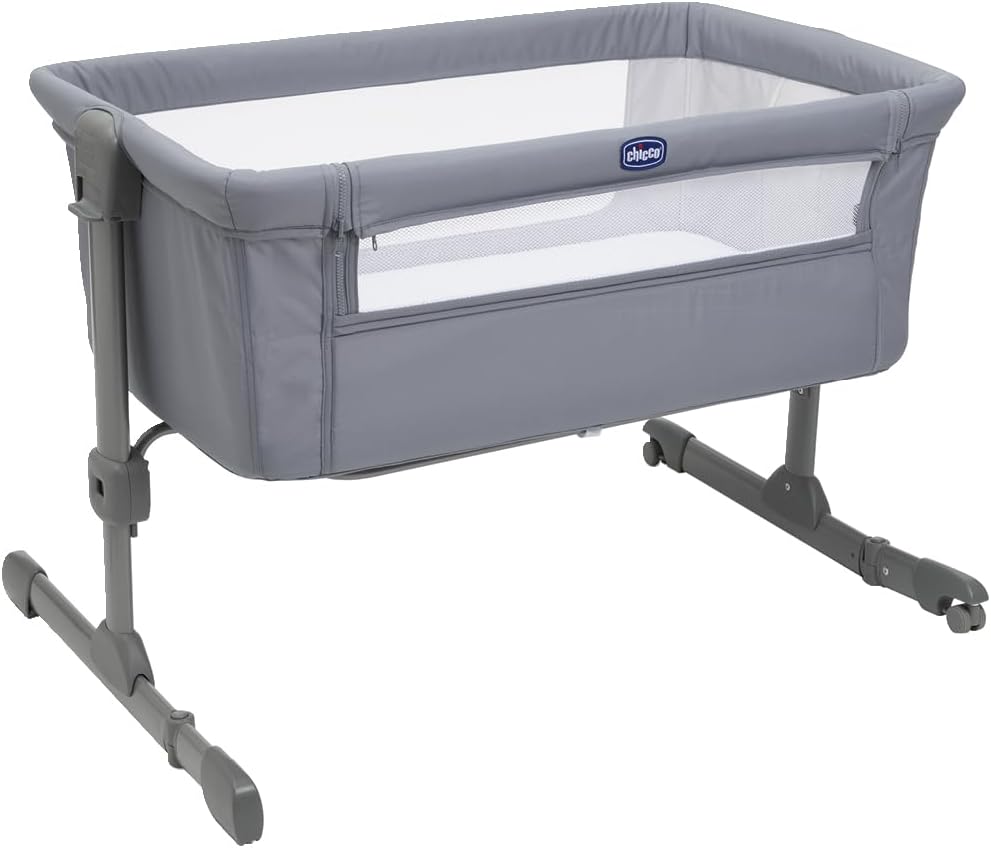
The bedside co-sleeper crib (co-sleeper, bedside crib, side-by-side crib) gives you the proximity of co-sleeping without the shared sleep surface. Baby has their own firm, safe sleep surface attached to or very close to the adult bed. You can reach baby for night feeds without sitting up fully, the primary practical appeal of bed-sharing, while maintaining a separate sleep environment.
The Chicco Next2Me is the best-selling bedside crib in Europe: 8 height adjustments work with most adult bed frames, breathable mesh sides, and easy fold for travel. See our full guide: Best Co-Sleeper Cribs 2026.
Affiliate disclosure: links earn us a small commission at no extra cost to you. Learn more